

Quick answer
Dress in three waterproof layers for whale watching tours in Victoria BC: a moisture-wicking base layer, an insulating mid-layer like fleece, and a windproof waterproof outer shell. Wear closed-toe non-slip shoes with good tread, bring a warm hat and gloves even in summer, and pack sunglasses with a retaining strap. Ocean temperatures remain cool year-round, and spray from vessel movement soaks exposed clothing regardless of forecast conditions onshore.
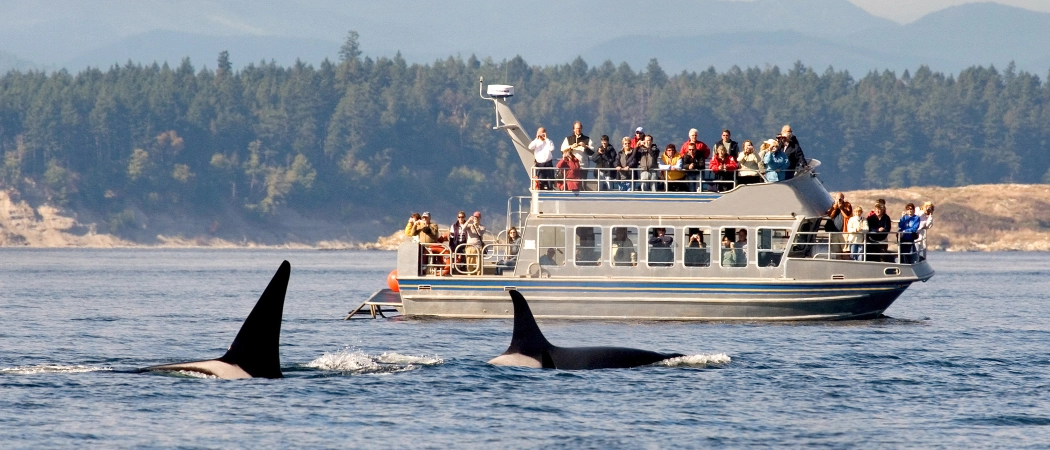
Victoria's whale watching vessels depart from Inner Harbour and Fisherman's Wharf between 09:00 and 17:00 daily, carrying passengers into the Strait of Juan de Fuca and Haro Strait where orca, humpback, and grey whales feed. Water temperatures in the Salish Sea hold steady between 8°C and 14°C across all seasons, creating microclimates that bear little resemblance to Victoria's downtown weather reports. Understanding what to wear whale watching in Victoria BC starts with recognizing that marine conditions differ sharply from land forecasts. A calm 18°C afternoon in the Inner Harbour translates to 12°C with 30-knot winds three kilometres offshore. Zodiac-style inflatable vessels generate continuous spray even in flat conditions, while covered boats expose passengers to wind chill on open observation decks. Cotton absorbs moisture and loses insulating capacity within minutes, making synthetic or wool base layers the foundation of effective marine clothing systems. Footwear requirements focus on traction rather than waterproofing. Boat decks remain wet throughout excursions from spray, deck wash, and passenger movement. Rubber-soled closed-toe shoes with deep tread prevent slips during whale sightings when passengers move quickly to railings. Sandals, heels, and smooth-soled fashion sneakers create safety hazards on fiberglass and aluminum surfaces. Operators departing from Fisherman's Wharf and Inner Harbour check footwear during 09:00–16:00 arrival windows, refusing boarding to passengers in inappropriate shoes. Sun protection matters as much as thermal layering on Victoria whale watching excursions. The Salish Sea's reflective surface doubles UV exposure even under cloud cover, burning unprotected skin within 40 minutes. Polarized sunglasses reduce glare that obscures whale blows and dorsal fins at distance, while retaining straps prevent loss during high-speed transits between viewing locations. Wide-brimmed hats require chin straps to stay secured in open-water wind conditions that gust without warning.
“Water temperatures in the Salish Sea hold steady between 8°C and 14°C across all seasons, creating microclimates that bear little resemblance to Victoria's downtown weather reports.”
The Essential Checklist: What to Wear Whale Watching in Victoria BC
Prepare for changing conditions on the water with clothing that keeps you warm, dry, and safe during your tour.
-
Wear multiple thin layers — Temperatures drop significantly on the open water, and layering allows you to adjust as conditions change.
-
Bring a windproof and waterproof jacket — Wind chill and ocean spray are constant factors, even on calm days.
-
Choose closed-toe shoes with grip — Boat decks can be wet and slippery; sandals and smooth-soled footwear create safety risks.
-
Pack a warm hat and gloves — Your extremities lose heat quickly in maritime wind, regardless of the season.
-
Avoid cotton; choose synthetic or wool — Cotton retains moisture and loses insulating properties when damp from spray or sweat.
-
Bring sunglasses and sunscreen — UV reflection off the water intensifies exposure, even on overcast days.
Seasonal Considerations for What to Wear Whale Watching in Victoria BC
The peak whale watching season in Victoria runs from May through October, when migratory patterns bring orcas and humpbacks into local waters. Choosing your time carefully impacts both marine activity and the layers required for your comfort.
Peak Season (May–Sept)
High crowd densityMild temperatures (15°C–22°C)
Warmer conditions allow for lighter layers, though wind chill remains constant on the water. Early season trips require additional warmth as spring air remains cool.
Off-Peak (Oct–April)
Low crowd densityCooler temperatures (5°C–12°C)
Substantial thermal layers and waterproof outer shells are necessary for these months. Marine exposure is significantly colder during winter months.
Morning vs. Afternoon
Variable—
Morning departures often feature calmer water, while afternoon trips can experience increased wind. Regardless of time, always prepare for temperatures 5°C to 10°C lower than at the Inner Harbour.
Verdict: For the balance of whale activity and moderate weather, aim for weekday departures between 09:00 and 16:00 during the months of May, June, or September.
Safety Rules: What to Wear Whale Watching in Victoria BC
Victoria's whale watching vessels operate in open water where secure footing and movement safety depend on appropriate footwear and clothing choices. Operators enforce strict policies on footwear and loose items to protect guests and crew during variable sea conditions.
Do
- Wear closed-toe shoes with non-slip rubber soles for deck traction
- Secure long hair and tie down scarves before departure
- Keep hands free during boarding and vessel movement
- Stow bags and loose items in designated storage areas
Don't
- Don't wear flip-flops, sandals, or heeled shoes on the vessel
- Don't leave items unsecured on deck or seating areas
- Don't wear flowing garments that can catch on equipment
- Don't carry loose accessories that risk falling overboard
Opening Hours for Planning Your Whale Watching in Victoria BC Trip
The whale watching operators in Victoria operate daily to accommodate guest departures. Please review the schedule below to assist with your trip planning.
| Monday | 09:00–17:00 | |
|---|---|---|
| Tuesday | 09:00–17:00 | |
| Wednesday | 09:00–17:00 | |
| Thursday | 09:00–17:00 | |
| Friday | 09:00–17:00 | |
| Saturday | 09:00–17:00 | |
| Sunday | 09:00–17:00 |
Arrival Logistics and What to Wear Whale Watching in Victoria BC
Whale watching departures are concentrated at the Inner Harbour and Fisherman's Wharf in Victoria, BC. These locations are accessible by foot from the downtown core or via local transit and taxi services.
Walking paths to Inner Harbour or Fisherman's Wharf
BC Transit to Government Street or Erie Street
Direct to Inner Harbour or Fisherman's Wharf
Check availability
Frequently asked questions: What to wear whale watching in Victoria BC
Everything you need to know about what to wear whale watching in victoria bc